Why a Variety Bill Needs a Change of Pace
A variety bill needs a change of pace to help each act register. Learn how to arrange contrasting turns, plan transitions, and shape a satisfying show.
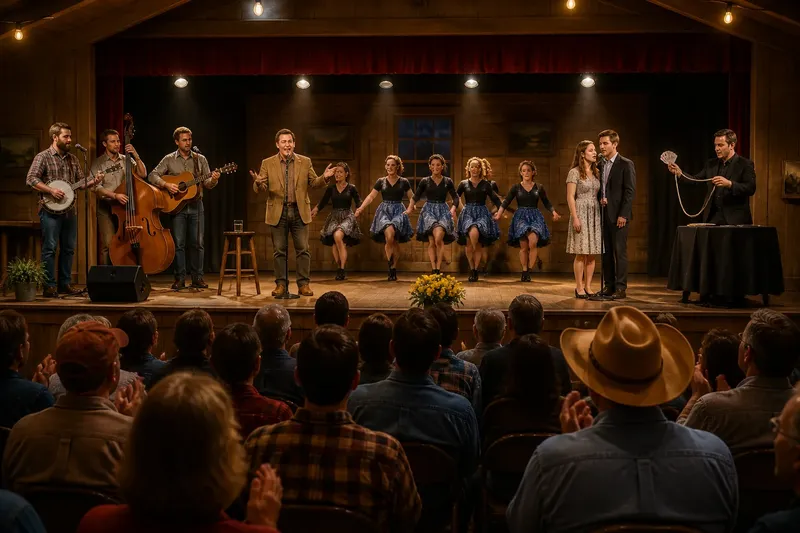
A variety bill needs a change of pace to help each act register. In a village hall, the shift from a bluegrass tune to a comic story can redirect the room’s attention without asking either performer to change what they do.
Imagine a fictional committee in Alder Creek arranging a Saturday benefit in its old grange hall. The bill includes a bluegrass trio, a comic monologist, a clogging group, a close-harmony pair, and a magician who works with cards and rope. The challenge is not to rank those performers, but to decide what kind of attention each turn asks from the audience—and what should come next.
What changes when the pace shifts?
Pace is more than tempo. A quick banjo tune asks listeners to follow rhythm and instrumental interplay. A comic story may move briskly, yet draw attention toward one voice and the turns in its tale. Dance brings movement into view; a harmony song asks the audience to listen for blended sound.
Two acts can therefore feel similar in energy but different in focus. The bluegrass trio and clogging group both bring strong rhythm, but one centers on music and the other on visible movement. A spoken story between them can give the audience a different task before the dancers take the floor.
A bill does not need to alternate fast and quiet acts by rule. Two energetic turns may work well together if they offer different textures and the room has the appetite for them. The useful question is what the audience has just been asked to do: clap, listen closely, follow a story, laugh, or watch movement.
How can organizers map each act’s audience focus?
Before setting the running order, the Alder Creek committee writes a short note for each performer. It records the act’s focus, the mood it leaves behind, and any practical transition that could affect its placement. The notes are a planning tool, not a scorecard.
- Bluegrass trio: The audience may tap or clap along, and instruments need to be cleared afterward. If that changeover would distract from a quiet next act, then place a host’s brief transition or another suitable turn between them.
- Comic monologist: The audience follows spoken words, and the performer needs a clear view of the room. If sightlines are blocked, then adjust seating or place the monologist where the audience can see and hear comfortably.
- Clogging group: The floor and shoes are central, and attention turns toward movement. If the floor is not ready, then resolve the staging before introducing the group rather than making the dancers wait in view.
- Close-harmony pair: Quiet listening helps the sound come through, and setup is simple. If applause is still carrying over, then allow it to settle before the first chord.
- Magician: The audience watches closely, and props need to be ready. If the planned sightlines leave people guessing from the back, then adjust the staging or choose a different placement.
These observations show why “lively” and “quiet” are not enough to describe an act. A song can invite audience participation, while a spoken piece can hold a room through close attention. Organizers get a more useful picture by considering focus, mood, and staging together.
Where should the first contrast appear?
The opening acts establish the evening’s character. The Alder Creek committee puts the bluegrass trio first because its familiar sound can welcome people as they settle in. The comic monologist follows, shifting attention from group music to a single voice and a sequence of observations.
A brief host introduction can make that handoff feel deliberate. The host thanks the trio, lets the applause finish, then introduces the monologist without explaining the committee’s entire reasoning. Specificity helps: naming the next performer and the kind of act ahead gives the audience a clear cue.
The clogging group comes third. After listening to a story, the audience has a new focus for the next burst of rhythm: watching the dancers’ footwork. The change is not simply from quiet to loud; it is from following words to following movement.
How can the middle of the show keep its shape?
The middle is where repeated patterns can become noticeable. The committee considers putting the close-harmony pair after the cloggers, then closing with the magician. That arrangement shifts from movement to close listening, followed by a visual puzzle that gives the audience a final point of focus.
The choice depends on the acts and the room. If the magician’s routine calls for volunteers to move through narrow aisles, the grange hall’s layout could make that awkward. If the harmony pair has a buoyant closing song, it could instead provide the stronger ending. The committee should compare the likely audience experience and practical staging, rather than assigning fixed jobs such as “quiet act” or “closer.”
One helpful way to assess a sequence is to describe each turn as an audience activity: join in, follow a story, watch the floor, listen for harmonies, then look closely. If the descriptions keep repeating, try moving an act and consider whether the new transition is workable.
What should the host do between contrasting acts?
A transition should carry the audience across a change without competing with the performer who follows. After the bluegrass trio, the host can thank the musicians and make a concise introduction. After the cloggers, a pause while applause settles can prepare the room for the harmony pair.
The host need not tell people to be quiet. A calm introduction and a moment for the singers to take their places can signal that the next act asks for close listening. If equipment must be moved, say so plainly and keep the changeover focused on the practical task.
Introductions work best when they help the audience attend without explaining the performance in advance. Mentioning that the next pair sings close harmony gives listeners a point of focus; a long account of the performers’ history can delay the shift and make the show feel interrupted.
What questions help settle a variety bill’s running order?
Should every fast act be followed by a quiet one?
No. Another energetic act can follow if it offers a distinct focus, such as dance after instrumental music, and the performers’ material supports the pairing. Ask whether the next turn gives the audience a fresh experience rather than simply repeating the previous one.
Can similar acts appear next to each other?
Yes, if the performances differ in mood, focus, or staging. A comic song and a straight ballad may share instruments but create contrasting experiences for the audience.
Does the quietest act belong in the middle?
Not necessarily. A quiet performance can open or close a show if its material suits that role. Place it according to the effect of the act and the needs of the full bill, not a general rule about softer work.
What if an act needs extra setup?
Include the changeover in the running order and arrange equipment and stage access in advance. If the setup would interrupt the next act’s mood, then move the act or plan a clear, brief host transition.
How does a fully worked running order come together?
For the fictional Alder Creek benefit, the starting inputs are five acts: a bluegrass trio with instruments to clear, a word-focused comic monologist, a clogging group that needs a ready floor, a close-harmony pair, and a magician with prepared props. The committee wants to keep the floor change out of the quietest moment and finish with a strong visual focus.
- The committee places the bluegrass trio first, giving the audience a welcoming musical opening while late arrivals settle.
- It puts the monologist second, changing the focus from group sound to one voice. The host prepares a short introduction, and the audience gets a moment to follow a story.
- It schedules the clogging group third, after confirming that the floor is ready. The result is a move from spoken humor to visible footwork.
- It places the harmony pair fourth and allows applause to settle before the singers begin. The audience gets a listening-focused turn after the movement.
- It closes with the magician, with props prepared and sightlines checked. The bill ends on a visual question rather than another song.
The resulting order is bluegrass trio, comic monologist, clogging group, close-harmony pair, magician. If the hall’s layout makes the magician’s props or sightlines difficult, the committee would need to revise that final placement or staging. The order is a working decision, not a formula: each choice follows from the performers’ needs and the audience’s changing focus.
For anyone asking why a variety bill needs a change of pace, the practical answer is that a clear shift helps each turn arrive on its own terms. A useful last check is to walk the room’s sightlines and talk through each handoff with the host; a sequence that reads well on paper still needs to work from the audience’s seats.