From Travelling Players to Touring Acts: What Changed on the Road
Touring acts changed as transport and performance tools evolved. Trace the practical shift from portable entertainments to coordinated productions across towns.
The history of touring acts is not a single march from carts to modern vehicles. Travelling players worked in different ways across eras and regions, and the evidence varies; the clearest change is that some companies could gradually carry more of the production with them.
That shift altered what audiences might see, but it did not erase the older craft of making a performance legible in a room the company had never visited. The distinction is less about one kind of performer replacing another than about changing conditions of travel, equipment, and organization.
What could travelling players take on the road?
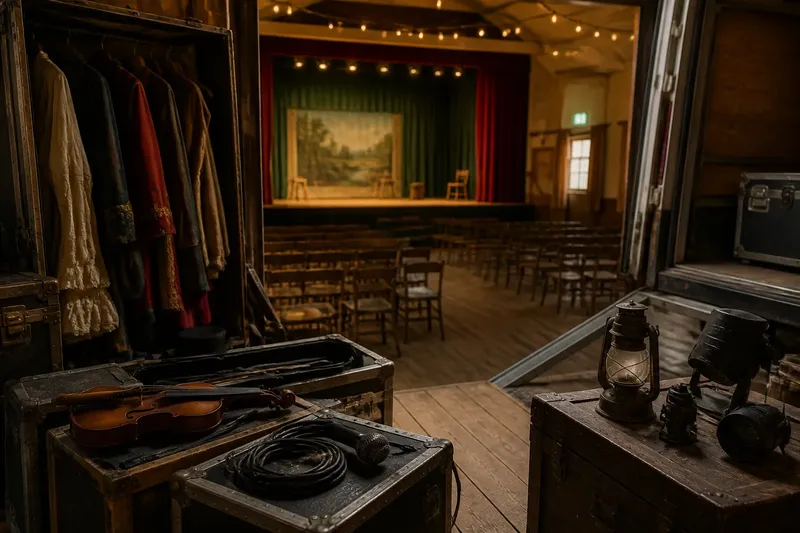
Before a company could rely on dedicated transport, its practical options depended on the people, animals, or conveyances available in a particular place and period. Costumes, instruments, and compact props competed for limited carrying space. A portable object could suggest a setting; an elaborate scene might be impractical to move or assemble.
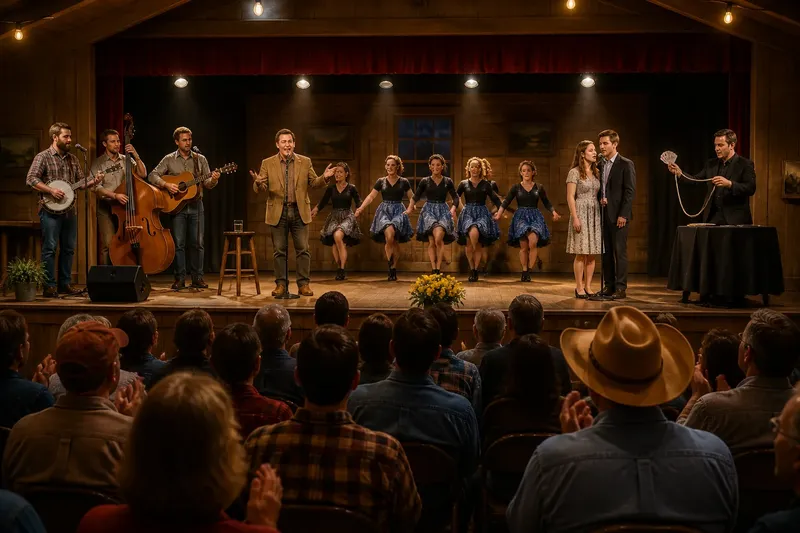
Those constraints shaped performance choices. Familiar stories, recognizable characters, direct address, and music could help an audience follow a show without elaborate scenery. This was not a universal formula: itinerant performers worked in varied traditions and circumstances. But a performance that did not depend on a fixed stage picture had more ways to fit an unfamiliar space.
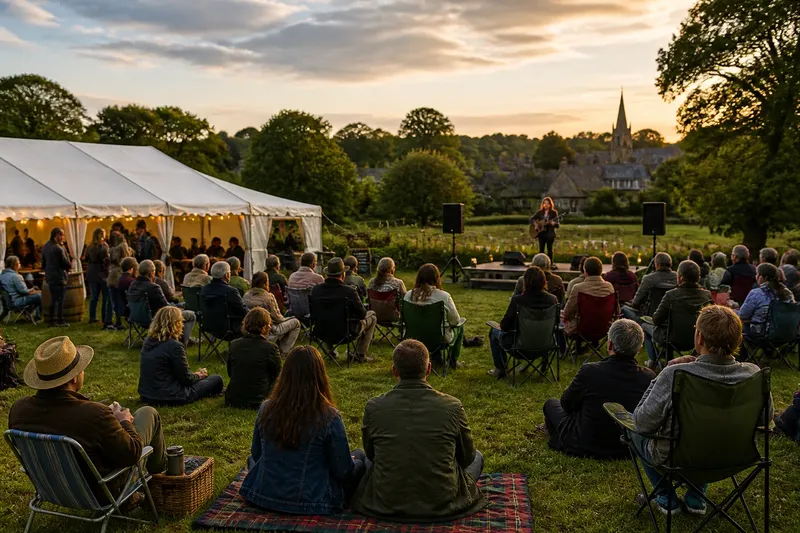
Local contacts mattered as well. A fair organizer, innkeeper, or community group might help a company arrange a place to perform or make its arrival known. The details differed from town to town, so the route often depended on relationships as much as on the road itself.
How did transport alter the scale of a touring show?
Railways and road vehicles changed the possibilities for companies able to use them, but not all at once and not everywhere. Their availability depended on time, location, cost, and the kind of company traveling. Where transport could carry heavier loads, a troupe might bring additional costumes, scenery, instruments, or equipment; elsewhere, a more compact show remained the sensible choice.
Carrying more also meant coordinating more. Cases needed a place to go, scenery had to suit the available room, and performers had to allow time to unload and set up. A larger production could establish a more consistent visual presentation across stops, but that consistency depended on venues with suitable access and space.
Road travel could connect some communities beyond a rail line, while a venue’s narrow entrance, low ceiling, or limited backstage area could still shape what was possible. Transport extended a company’s options; it did not make every production fit every hall.
What did sound and lighting equipment change?
Portable microphones and speakers gave some singers and speakers another way to reach an audience, particularly in rooms where natural projection was not enough. They also brought practical tasks: positioning the equipment, routing cables, and working with whatever power and setup the venue could support.
Portable lighting offered a way to direct attention or suggest a mood without relying entirely on fixed fittings. The degree of control varied with the equipment and the room. In a plain community hall, a modest arrangement could be more workable than a complicated setup that needed space or conditions the venue did not have.
Neither tool supplied the performance itself. A microphone can carry a voice, but timing and expression still belong to the performer. A light can draw the eye, but it cannot make a story clear on its own.
Why did local hosts remain part of the story?
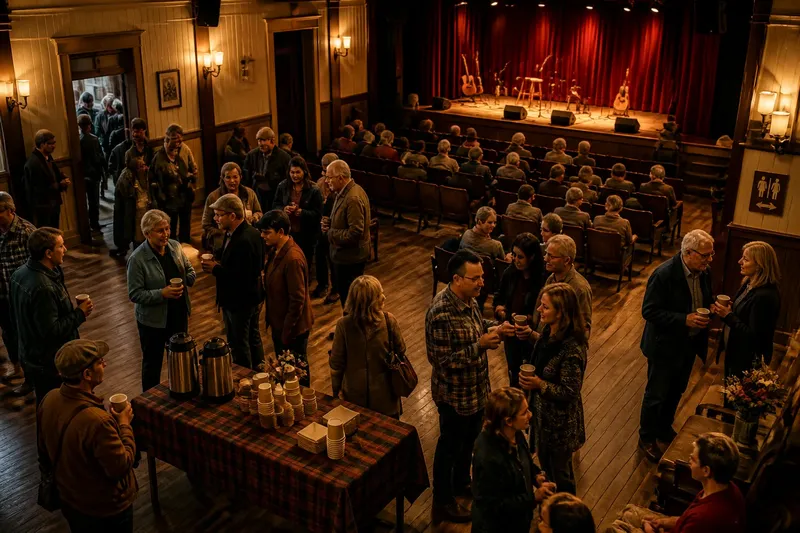
Equipment cannot tell a visiting company how a particular hall is used or what local organizers need from an event. A host can clarify the room’s layout, the expected audience, and any customs tied to the occasion. The information may be simple, but it can prevent a performance plan from colliding with the way the venue actually works.
Say a two-person folk act is booked into a village hall with a small performance area and one entrance for both people and equipment. The organizer explains that families and older residents are expected, and that the doorway must stay clear. The pair leaves cases away from the entrance and chooses an opening suitable for a mixed-age audience; the observable result is an unobstructed route and a show that begins without the room’s access becoming a distraction.
That kind of exchange does not require a company to remake its show for every stop. It gives the performers enough local context to make informed choices while leaving the community’s customs in the hands of the people who know them.
How can a touring act keep its identity and meet a new audience?
A repeatable show needs a stable center: songs, stories, or a sequence that performers can prepare and deliver. A brief local welcome or a change in pacing can acknowledge a particular room without turning its identity into borrowed material. The distinction is like setting a familiar cup on a different kitchen table: the object travels, while the place remains someone else’s.
When a reference or custom feels uncertain, a performer can ask the host or leave it out. That choice protects the show’s own character and avoids treating a community as a collection of interchangeable details.
What should hosts and performers clarify before arrival?
A short advance conversation can settle practical questions that a booking alone may not answer. For each item, the observation should lead to a decision and an alternative:
- Entrance: Check which doorway performers and equipment can use. If it is shared with the audience, plan arrivals and unloading so it stays clear; if there is a separate access route, use the route the host identifies.
- Performance space: Check where the act can set up and whether cases can remain nearby. If the area is limited, reduce the setup to what fits; if there is suitable storage, keep spare cases out of audience space.
- Sound: Check what equipment is available and who can explain its arrangement. If the system is unfamiliar or unavailable, agree on a simpler sound plan; if it is supported by venue staff, coordinate with them before the audience arrives.
- Power and cables: Check where power is available and how cables can be routed. If a route would cross an audience walkway, reposition the setup or use another approved arrangement; if cables can remain clear of traffic, confirm that path with the host.
- Event context: Check whether the performance is part of a fair, fundraiser, or seasonal gathering. If the occasion has a local custom, ask the organizer how to acknowledge it; if there is no relevant custom, keep the introduction focused on the show.
- Local contact: Check who will be reachable before arrival and who can answer questions at the venue. If the named contact is unavailable, request an alternate; if they are present, confirm where to meet them.
Imagine an invented booking for a traveling acoustic duo. The host’s message says that the performance space is at the front of the hall, the only entrance opens directly beside it, and the venue has no sound system; it also names an organizer who will meet the duo. The performers decide to carry only the instruments and compact equipment needed for an acoustic set, arrange to meet the organizer before bringing items inside, and leave the entrance area open. The resulting plan trades amplified coverage for a simpler setup and a clear route through the hall.
What questions do readers ask about touring acts?
What is the difference between travelling players and touring acts?
The terms point to different working conditions, not necessarily different artistic purposes. Travelling players often depended on portable performance and local arrangements, while some later touring acts could carry vehicles, sound systems, or more elaborate equipment.
Did rail travel make every show larger?
No single transport change affected every company in the same way. A railway could help move a heavier production where routes and access suited it, but smaller acts and places beyond convenient connections still depended on other arrangements.
Why does a modern touring show still need local information?
A venue can differ in layout, available equipment, and event customs regardless of what the act brings. A host’s account helps performers choose a setup that suits the actual room rather than an assumption about it.
Does a touring act need to change its performance in every town?
No. A consistent central show can travel intact, with small adjustments to its introduction or pacing when local context calls for them. If a custom is unclear, asking the host or leaving it aside is a sound choice.
What does the road reveal about touring history?
The transition from travelling players to touring acts was uneven: transport, equipment, and local circumstances shaped what any company could carry and present. Some productions expanded their materials and coordination; others retained the compact methods that suited their routes and venues.
The useful historical question is not simply how much a company moved, but what its means of travel made possible in a specific setting. A closer look at the route, the load, and the host’s role can explain why one show relied on a few portable objects while another arrived with a coordinated production.