Hall, Marquee or Green: Choosing a Setting for a Small Show
Choose a hall, marquee or green for a small show by weighing audience comfort, sound, weather, access and the character each setting lends a performance.
For a small show, the right setting is the one that lets the audience hear, see and settle in without working around the venue. Choosing between a hall, marquee or green starts with the kind of attention the performance needs, then turns to comfort, access and the practical work of preparing the site.
What should the show feel like?
Describe the intended audience experience before comparing venues. Is this a seated evening where listeners should catch every lyric, a lively social event with room to chat, or a relaxed performance that draws passersby into a shared occasion? That answer gives you a useful first filter.
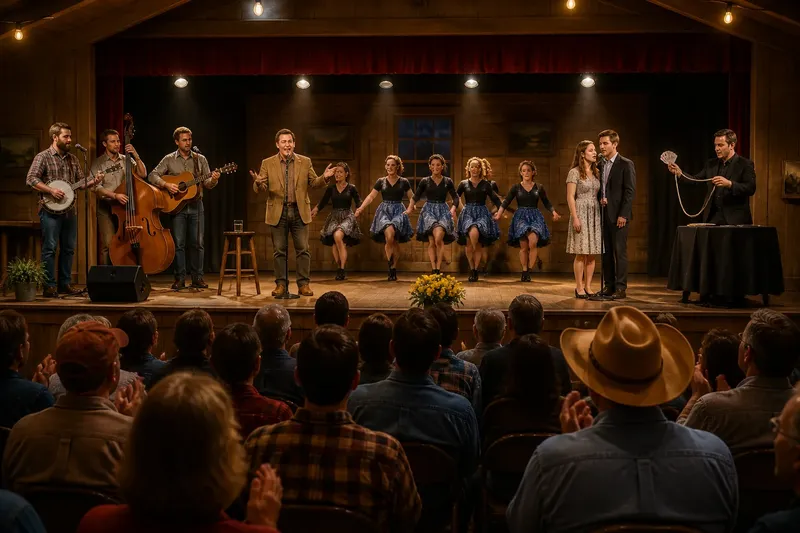
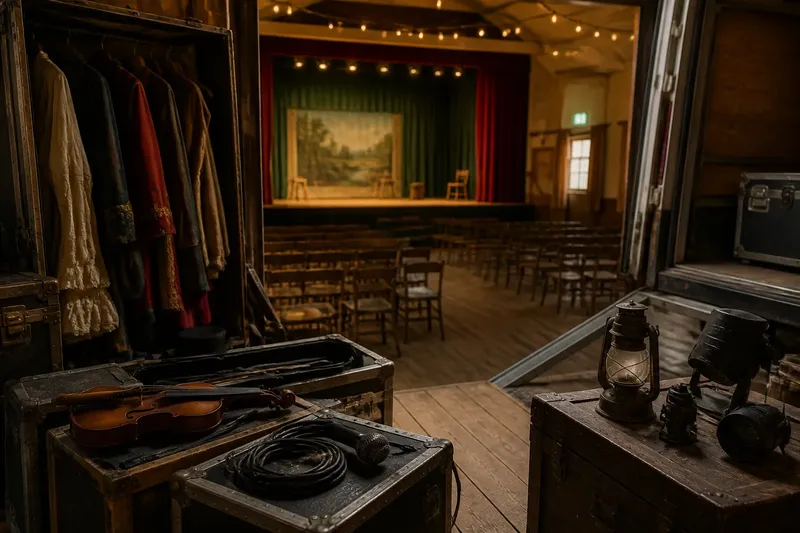
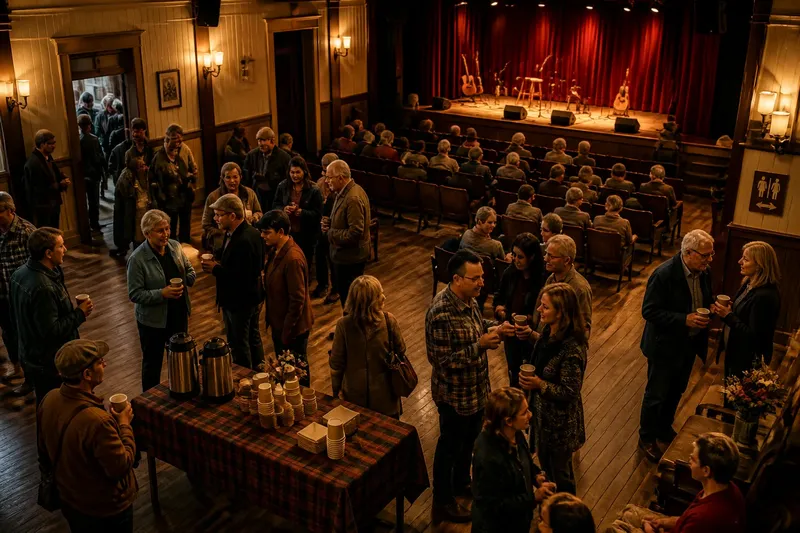
A hall gathers people into a defined audience. Walls and a ceiling create a sense of enclosure, and seating can focus attention. That closeness can suit storytelling, folk music, amateur drama and small ensembles. It can also feel crowded or formal if the layout leaves little room to mingle.
A marquee marks out a gathering while keeping a connection to the outdoors. Open sides can make it feel sociable and temporary, as if the event belongs to that particular day. Sound and comfort may change with the wind, the sides’ position and the number of people inside.
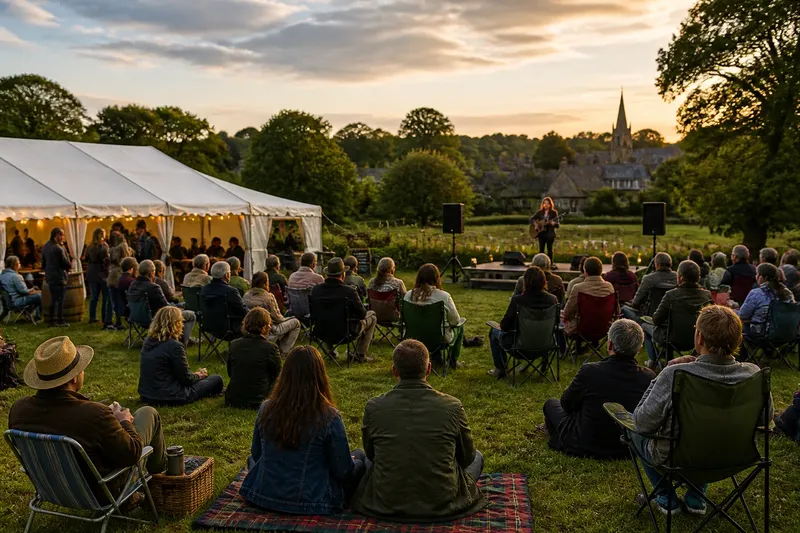
A green offers the least enclosed setting. People can spread out on blankets or chairs, arrive and leave casually, and take in the landscape along with the act. The freedom has a tradeoff: attention is less contained, and voices, nearby activity and people moving around become part of the listening environment.
How will the audience hear and see the act?
Consider the actual performance rather than an abstract idea of good sound. A quiet singer using little amplification may benefit from the reflective surfaces of a hall, though an echoing room can blur words. A drummer or amplified group may need space to manage volume so people near the stage are not overwhelmed and those farther away can still follow the music.
In a marquee, sound can escape through open sides, while wind may rustle the canvas or unsettle lightweight fittings. On a green, no walls help contain sound, so audience position and nearby activity matter. Ask the act what it needs, then walk the site and listen for traffic, machinery, a busy path or other persistent noise.
Visibility matters just as much. Check whether people at the back can see the performer without standing in a doorway or blocking others. A low stage, sloping lawn or line of seated heads may change the view. Close sightlines matter for a show built around facial expression; more distance may feel natural for a band with a strong visual presence.
Which site can support a comfortable gathering?
Look beyond the performance area. Guests may need a clear entrance, somewhere to sit before the show, toilets, shelter while waiting and a route that works for people with different mobility needs. A familiar hall may already have many of these features. A marquee or green may need a more detailed plan for arrival, signs, seating and access across the ground.
Comfort affects how readily people can focus. A draughty hall, a stuffy tent or a bare stretch of grass can distract from a thoughtful performance. Consider shade, ventilation, seating and likely conditions during the event. Grass that seems inviting in dry weather may be difficult for chairs or mobility aids after rain; a marquee with closed sides can feel very different from one open to the breeze.
Ask what the venue provides: power, lighting, sound equipment, furniture and any restrictions on how the space can be used. For outdoor choices, clarify who supplies and manages the marquee, stage, temporary facilities and equipment the performers require. Requirements depend on the site, its owner and local rules, so check relevant instructions and permissions before committing.
How much atmosphere should the setting supply?
A venue can make an event feel rooted in its community. A hall may carry the everyday warmth of a place used for clubs and celebrations. A marquee can signal a special gathering without making the show feel distant. A green can place performers among familiar paths, trees or village buildings.
That atmosphere should support the act, not compete with it. A quiet spoken performance may be swallowed by the bustle of an open gathering; a high-spirited folk dance may feel constrained in a room with little space around the performers. The setting also shapes audience behavior. A hall invites people to settle into rows, while a green permits drifting, conversation and children moving about. Neither is better; each sets different expectations.
Say a community has a hall with fixed seating, a lively echo and no way to rearrange the chairs. The organizers need a close acoustic evening with a singer and a small group. They compare a marquee site that has a quiet, level audience area and a sheltered route from the entrance, then ask the performers what sound support they need. If the marquee’s power, access and equipment arrangements check out, they choose it; the expected result is a compact audience able to see the performers and follow the lyrics, with a less formal feel. If those arrangements cannot be confirmed, the hall remains the more workable option, despite its echo.
Which practical checks settle the choice?
- Sound: Listen from the audience area for echo, traffic or machinery. If the venue makes words hard to follow, then ask about sound support or choose a quieter site.
- Sightlines: Stand where the audience would sit and check for blocked views. If people at the back cannot see, then alter the seating or stage plan; if that is not possible, choose a site with a clearer view.
- Access: Walk the route from arrival point to seating and toilets. If it is difficult for guests with mobility needs, then arrange a suitable alternative route or select a more accessible venue.
- Shelter and ventilation: Check how the space can be opened, shaded or protected. If likely conditions would leave guests uncomfortable, then plan suitable adjustments or choose a more sheltered setting.
- Facilities: Confirm toilets, seating, lighting and power with the site contact. If an essential provision is unavailable, then arrange it separately or rule out that venue.
- Equipment and responsibility: Ask who supplies and manages the stage, sound equipment and temporary facilities. If responsibility is unclear, then get it settled before booking or compare a venue with clearer arrangements.
What do readers ask about choosing a hall, marquee or green?
Is a hall better than a marquee for live music?
It depends on the act and the room. A hall gives the audience enclosure, while a marquee can feel more open; sound, ventilation and available equipment may decide which suits the performance.
Does a green suit a quiet performance?
It can if the site is calm and listeners can gather close enough to hear. Background noise, wind and people passing through may make spoken words or unamplified music harder to follow.
What should organizers check before booking a marquee?
Ask who provides the structure, what facilities and equipment are included, and how the space can be adapted for the act and audience. Confirm access, shelter, lighting and power rather than assuming the tent supplies them.
Can a green work for a seated audience?
Yes, if there is a suitable area for chairs or blankets and a clear view of the performance. Check ground conditions, access routes and whether the audience can remain comfortable throughout the event.
How can you compare the options in order?
- Define the audience experience. Decide whether the show calls for close listening, easy conversation or a relaxed outdoor gathering.
- Match the setting to the act. Consider volume, spoken material, movement and how much performers depend on a clear view.
- Walk each possible site. Listen for background noise, inspect sightlines and notice how people will enter, sit and move.
- Check comfort and access. Consider shelter, ventilation, seating, toilets and routes across the venue or ground.
- Confirm practical provisions. Establish what equipment, facilities and permissions are available, and who is responsible for them.
- Choose the setting that supports the gathering. If a venue creates avoidable distractions or access problems that cannot be addressed, then choose the option that handles them better.
When comparing a hall, marquee or green, walk the route an audience member would take: arrive, find a place, watch the show and leave. If any part of that journey depends on an assumption about access, facilities or sound, confirm it with the site contact before making the choice. That practical check can matter more than a venue’s first impression.