A First-Time Host’s Checklist for Show Night
A first-time host’s checklist for show night helps you prepare the entrance, answer practical questions and hand a local performance over without a bottleneck.
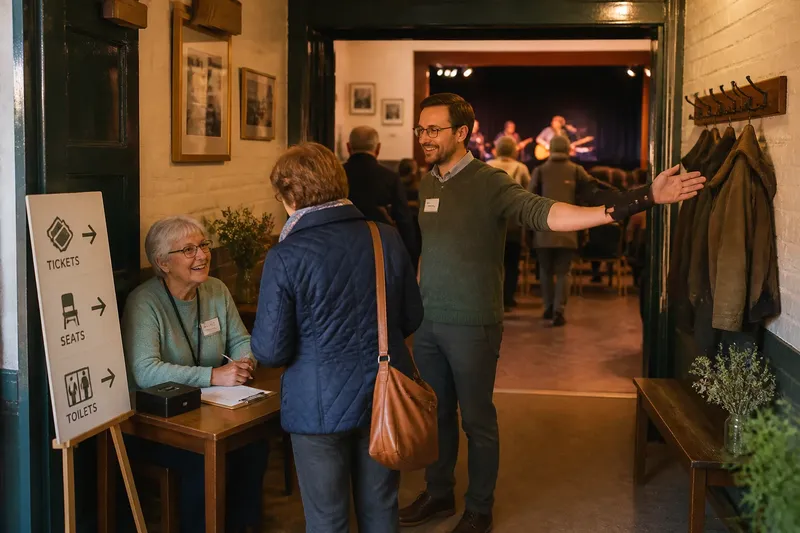
A first-time host’s checklist for show night should account for the moment a guest steps through the door. In a village hall or club room, a clear next move matters more than a polished welcome: people need to know where to go, and the performers need a reliable signal that the room is settled.
The host’s work is less like presenting a show and more like tending a threshold. A brief greeting, a useful direction, and a dependable person for questions can keep the entrance from becoming an unintended waiting room.
Which arrival plan fits your room?
Choose a setup that matches the entrance and the people available to help. A host working alone should not promise assistance at a second location, while a team can divide responsibilities without making guests guess whom to approach.
- One entrance, one host: Stand where you can see arrivals and the seating area. Check whether tickets must be handled by you; if so, keep the list or ticket details at hand, and if not, direct guests to the person who is responsible.
- One entrance, a ticket volunteer, and a host: Agree that the volunteer checks names while you answer other questions. If the queue reaches the doorway, ask the volunteer to pause non-ticket conversations and help keep the entrance open; if the volunteer is occupied, handle only the questions you can resolve without leaving the door.
- Drop-in attendance: Put a clear sign near the entrance with the seating direction and any agreed information about coming and going. If guests still have to ask where to sit, move the sign to the point where they choose a direction.
- Questions about access or facilities: Ask the venue contact which routes and facilities are available. If a detail is confirmed, give that direction; if it is not, say who can verify it rather than improvising.
What should you prepare before opening?
Walk the route a guest will take, from the door to the room. Notice doors that look public but are not, corners where signs disappear from view, and furniture that narrows the path. Use simple signs such as “Tickets,” “Seats,” or “Toilets” only where they answer a real choice.
Confirm venue details with the person responsible for the room: where guests may sit, which areas are closed, where facilities are, and who can answer questions about unavailable amenities. If an instruction is unclear, check it before doors open instead of passing along a guess.
Prepare a short welcome that names the event and gives the next useful direction. Add only instructions the audience needs immediately, such as keeping an aisle clear or waiting for a cue before entering. A full running order belongs elsewhere unless guests need it to make a decision.
Keep ticket materials at the entrance only if you are handling them. Move bags, spare chairs, and other belongings out of the route. Think of the doorway like a coat rack: it works best when each thing has a place and people can still pass without weaving around it.
How can you keep arrivals moving without rushing them?
Notice the first arrivals rather than waiting for a crowd to form. Offer a greeting, then point out the next person or place they need. If someone begins a longer conversation while others are waiting, acknowledge the question and explain who can help next.
Say you are hosting a community music night in a hall with one narrow entrance, a volunteer checking names, and a seating area beyond a short corridor. You agree that the volunteer will handle the list while you direct people toward the room and answer only confirmed questions about facilities. If a guest asks about a route you have not checked, you introduce them to the venue contact instead of sending them down an uncertain corridor. The expected result is a visible ticket point, an entrance that remains passable, and a clear route for the guest whose question needs a different answer.
For a question you cannot answer, name the next person who can. A calm handoff is more useful than an invented answer, and it lets you remain available to the rest of the room.
What should guests hear before the performance?
Share information that affects comfort, movement, or the opening. Depending on the venue and event, that may include:
- Which seats are open and whether any are being held.
- Where the toilets or an accessible route are, once the venue contact has confirmed them.
- Whether food, drink, or photography is allowed, if those rules apply.
- Who can respond if a guest needs help during the performance.
- How late arrivals should enter, if the performers and venue have agreed on a plan.
Do not read every detail to each person or turn the welcome into a second performance. Tell the whole room only when a shared instruction needs everyone’s attention; handle personal questions with the relevant helper.
How do you agree that the room is ready?
Before guests arrive, settle on a signal with the person coordinating the performance. Decide how they will tell you the performers are ready and how you will tell them the audience has settled. A nod or a quiet word can work, provided both people know what it means.
Before sending that signal, check for practical issues: the entrance is passable, guests can locate seats, and people who need assistance know whom to approach. If someone is still settling, tell the performance coordinator what you see and follow the agreed arrangement rather than making a solo call.
Then make a concise introduction: name the event or performers as agreed, give any necessary last instruction, and turn attention to the stage. Keep additional remarks for another moment if they are not needed for the handoff.
What do first-time show-night hosts ask?
Should I greet every guest personally?
Welcome each person when you can, but keep the entrance usable for those arriving behind them. If a guest needs a longer conversation, connect them with the right helper or return to them when the doorway is clear.
What if guests are still arriving at the announced start?
Tell the performance coordinator what you can see and use the entry plan you agreed on. If there is no plan, ask the coordinator to decide before you tell guests whether to wait or enter.
Do I need to make an opening speech?
Only say what the audience needs before the performance begins. A brief introduction can identify the event and performers; leave unrelated announcements for a suitable point.
What should I do when I do not know an answer?
Say that you will check and direct the guest to the venue contact or designated helper. If that person is unavailable, tell the guest when and where you can follow up rather than guessing.
What should the show-night checklist confirm?
Use each observation to make a specific choice before the audience gathers. If the condition is not right, take the alternative action listed rather than leaving the issue for guests to solve.
- Entrance sign: Check whether a new arrival can see where to go. If the direction is visible, keep it in place; if not, move the sign to the entrance or add a person to point the way.
- Route to seats: Check whether chairs, bags, or tables narrow the path. If the route is open, leave it; if it is blocked, move the obstruction or ask the venue contact to arrange another path.
- Ticket handoff: Check whether one named person is responsible for tickets or the guest list. If that person is ready, direct arrivals there; if not, confirm who will take over before opening the door.
- Facilities information: Check whether the venue contact has confirmed the directions and available facilities. If confirmed, give the directions; if not, refer the question to that contact and do not guess.
- Guest questions: Check whether you know who can resolve questions outside your role. If you do, introduce the guest or point them there; if you do not, find the responsible contact before doors open.
- Readiness signal: Check whether you and the performance coordinator agree on the signal and its meaning. If you do, use it when the agreed conditions are met; if not, settle on a signal before the first arrival.
- Opening words: Check whether your introduction contains only the event name, performer introduction, and necessary instruction. If it does, use it; if not, remove remarks that can wait until later.
The first-time host’s checklist for show night is there to catch a snag, not to keep your eyes on paper. Once the entrance, contacts, and handoff are settled, watch how people actually move through the room: a pause at the wrong door or a glance toward an empty table tells you which small adjustment would help the next arrival.